
Every July 4th, I reflect on what various dates in our American history mean to me. I reevaluate my dedication to the cause of freedom and my investment in this Republic. I take some time to reflect on the sacrifices of the millions who have paid an enormous price to secure and maintain freedom for everyone.
The Year 1776 holds a very special place in my heart! I wonder if most truly appreciate what transpired? Let me briefly rehearse what 1776 means to me and to America.
We celebrate American Independence Day on July 4th each year. We identify it as the nation’s birthday when the Founding Fathers declared our Independence. Actually, they did that on July 2, 1776, and it was not the beginning of the Revolutionary War; that happened in April 1775.
It wasn’t the day Thomas Jefferson wrote the first draft of the Declaration of Independence, which took place in June 1776, and the Declaration was not signed until August 2, 1776. So, the Fourth of July is somewhat of a historical mystery, but it is one we never give thought to, or most never give thought to.
On July 4, 1776, the Continental Congress approved the final wording of the Declaration; therefore, that is the date that appears on the document, and thus, it became the date Americans remembered and identified as the Birth of our Nation.
I have no issue with that, for it is not the specific date that each item in the process transpired but what it meant and what it brought into being. In reality, until approximately 1817, there was not much hoopla over the date.
That changed in 1817 when John Adams complained in a letter that America seemed to be terribly disinterested in its past. Is that ever relevant in today’s revisionist history and the mood of so many in this nation? It was not until 1870, almost 100 years after the beginning of the Revolutionary War, that Congress declared July 4th to be a national holiday as a part of a bill that recognized several holidays, including Christmas.
The Fourth of July as a celebratory holiday is appropriate. Still, if we forget what it is all about, we do grave damage to our history and the appreciation of what transpired, the sacrifices made, and the amazing result of the act of incredible boldness and foresight the Founding Fathers exhibited, and the colonists demonstrated.
A new nation “conceived in liberty and dedicated to the proposition that all men are created equal,” as Abraham Lincoln eloquently declared, came into existence. It was a beacon of hope to the world and would become a demonstration of what a Free Republic with a Limited Government could afford its people and the world.
From those humble and, at times, obscure beginnings came a nation that would become the world’s industrial and military giant. It brought forth a nation under whose flag and constitution people could worship freely without undue interference from a potentate or government and could pursue their dreams entrepreneurially like never before witnessed in the history of the modern world.
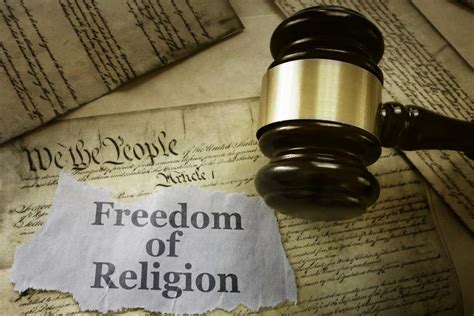
Now, about 250 years later, that beacon is not as bright as it once was, which is incredibly sad. In today’s political climate, there is a very real assault on our Religious Liberties and a concerted attempt to rewrite, revise, and/or reinterpret the Constitution to diminish our inalienable rights, the founders recognized and wrote a document to protect.
We were governed by an administration for four years that demonstrated little appreciation for the efficacy of the American Constitution. Joe Biden, like Barack Obama, viewed it as a hindrance to what he wanted to do, rather than appreciating its contribution to keeping this nation a free republic where the founders’ vision could be realized by its citizens.
Just a few short years ago, former President Obama vowed to “fundamentally transform” this nation and has traveled the world decrying American exceptionalism, apologizing for our perceived sins, arrogance, and contributions to the world as a result of who we are and what we have become. That is incredibly sad, especially to a veteran who served in times of war and a patriot who loves this nation.
The Fourth of July is more than a barbecue, time off work, fireworks, and festivities; it is Freedom and Hope! I still get chill bumps of pride and appreciation when I hear the National Anthem. When I consider what transpired in 1776 to bring about the United States of America as the Free Constitutional Republic, my heart sings with joy and appreciation.
Although it is not what the day is about, I remember all those who have and are serving in our military. I recognize and appreciate their contribution, commitment, and sacrifices. America would not exist as a Free Republic without them. So, on this Fourth of July, Independence Day, I stand and salute the flag and say Thank You to our Founding Fathers and the colonists who dared achieve the Dream of Freedom.
God bless you, and God bless America!






 Roybeaird's Blog